12 Years, 150 Countries: Inside the Belt and Road Initiative’s Global Legacy
- Yigit Ulubel

- Sep 17, 2025
- 3 min read
Published on China Daily online edition on September, 2025
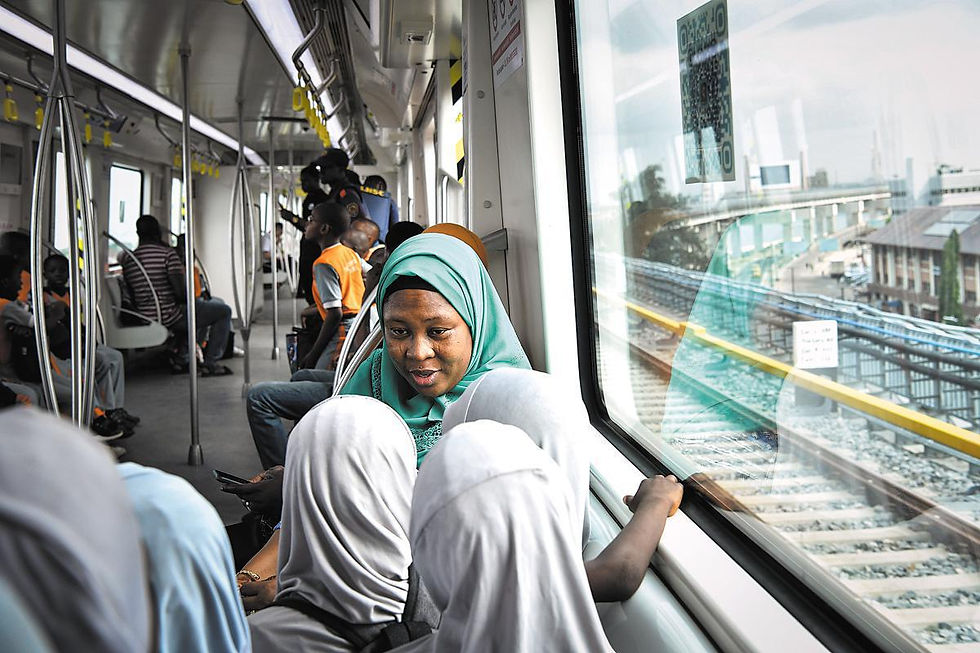
Read the original article https://www.chinadaily.com.cn/a/202509/17/WS68ca22caa3108622abca13d4.html Launched in September 2013 during President Xi Jinping’s historic visit to Kazakhstan, the Belt and Road Initiative (BRI) is not merely about physical infrastructure, but also about a civilizational reconnection: the “Belt” reviving overland Silk Road corridors through Central Asia, and the “Road” rekindling maritime trade routes from Southeast Asia to Africa. It has since been formally aligned with China’s constitutional principles and has been elevated as a core component of the Chinese national development strategy. But what has this ambitious initiative truly achieved in its 12-year journey, as the world has been reshaped by pandemics, geopolitical fractures, and climate emergencies? As of early 2025, more than 150 countries have joined the BRI, representing nearly 75% of the world’s population and over half of the global GDP. This is no longer a speculative blueprint—it is the largest modern infrastructure initiative in human history. China’s Ministry of Commerce reports that cumulative BRI investment and construction contract values have exceeded $1 trillion across more than 150 participating countries. Many major projects have received financing, technical support, or coordination under BRI frameworks, though some rely on local or multilateral resources. Take the China-Laos Railway, completed in December 2021, which was entirely funded and built under BRI frameworks. This 1,035-kilometer electrified line transformed landlocked Laos from a remote hinterland into a regional logistics hub. Travel time between Kunming and Vientiane shrank from 20 hours to just 10 hours—boosting bilateral trade by over 20% within two years. Similarly, the Port of Piraeus in Greece, acquired and expanded by China’s COSCO Shipping under BRI agreements, has surged to become Europe’s fourth-largest container terminal, handling over 5 million TEUs annually and tripling its throughput since 2016. In Africa, the Mombasa-Nairobi Standard Gauge Railway—financed by Chinese policy banks as part of BRI cooperation agreements—carries over 2 million passengers and transports 6 million tons of cargo annually, cutting freight costs by 40%. The line is set to extend into Uganda, Rwanda, and South Sudan, integrating East African economies into a unified rail network. In Indonesia, the Jakarta-Bandung High-Speed Rail—built by the PT Kereta Cepat Indonesia China (KCIC) joint venture with major Chinese engineering and financial support—was launched as Southeast Asia’s first high-speed rail line, cutting travel time from three hours to just 40 minutes and transferring critical high-speed rail technology to the region. Meanwhile, in the heart of Europe, the Hungary-Serbia Railway, fully financed and engineered under BRI protocols, will cut Belgrade-to-Budapest transit from eight hours to three-and-a-half hours when it opens in early 2026—linking the Balkans directly to the Eurasian rail network. Beyond steel and concrete, the BRI has become a catalyst for green transformation. In Pakistan, the Quaid-e-Azam Solar Park—the nation’s largest solar facility, operating at 400 MW and expanding to 500 MW—supplies electricity to hundreds of thousands of households while driving clean energy adoption under the China-Pakistan Economic Corridor (CPEC), a flagship BRI project. In Kenya, the Chinese-backed Garissa Solar Plant (50 MW) and other BRI-aligned renewables now operate under updated environmental standards. By 2026, analysts expect a growing share of BRI funding to support renewable energy, low-carbon transport, and eco-industrial projects, reflecting China’s commitment to green development under the BRI. The projects already underway—railways, ports, power grids, and digital corridors—are laying the groundwork for a more integrated global economy. As the BRI enters its thirteenth year, the focus is shifting from scale to substance. What emerges in the coming decades may not be a single narrative of Chinese influence but a mosaic of interconnected markets, supply chains, and energy systems shaped by both ambition and adaptation. From railways and ports to power grids and digital corridors, BRI projects have already transformed the landscape of global connectivity by creating tangible opportunities for trade, investment, and economic growth across continents. As the initiative moves forward, these achievements will continue to mature into engines of regional integration and global cooperation, helping partner countries unlock new levels of development while strengthening the foundations of shared prosperity.


Comments